Παράκτιες και Ενδοχωρικές Θίνες

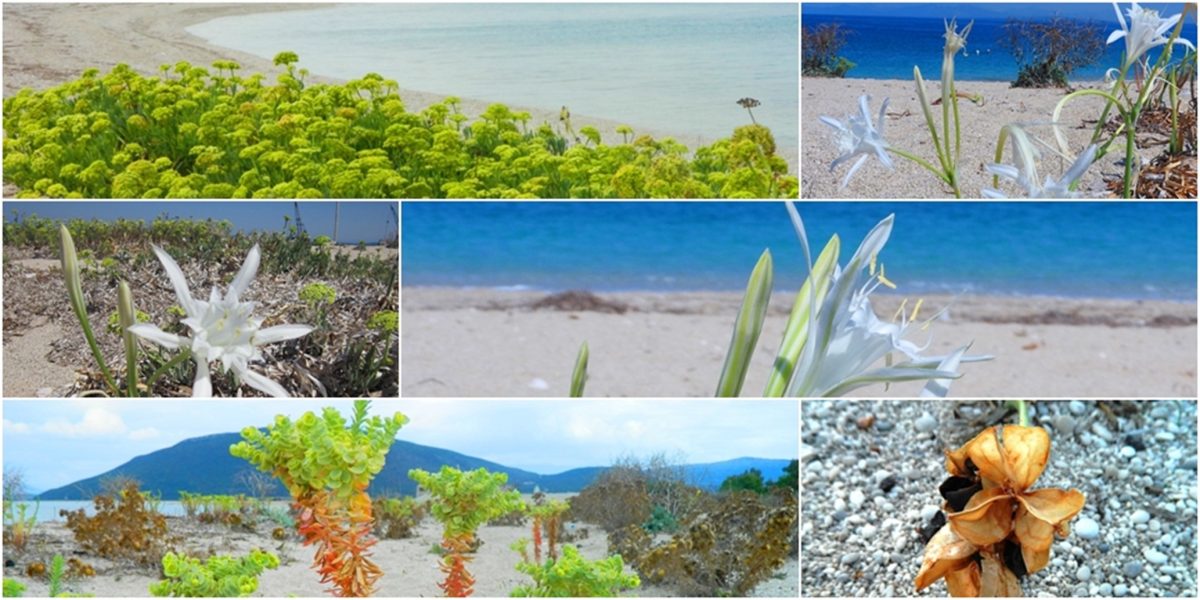
Coastal and inland dunes are a group of habitat types that, based on Annex I of Directive 92/43/EEC, are priority habitats and are often found in areas of the Natura 2000 Network. The subject of this thematic unit is the observation and recording through citizen science of coastal and inland dunes (2110: Prototypical moving dunes, 2120: Moving shoreline dunes with Ammophila arenaria, 2220: Dunes with Euphorbia terracina), of the northern coastline of Lefkada (Gyras Beach, Agios Ioannis Beach). On the beaches, the “low moving sand dunes” are formed which can reach a height of up to 3 meters and are found very close to the sea. Dunes play a huge regulating role both in protecting the beach from erosion, holding back the sand (from the action of wind and waves), and in the ecological balance of the coastal ecosystem. The sand dunes create habitats for the preservation of biodiversity and are characterized by a wide variety of plants, which are adapted to the sandy soil and the saltiness of the sea, while also hosting similar fauna. Therefore, the disappearance of sand dunes means the disappearance of the plants or animals they host.
The most well-known plant that grows on the sand dunes is the sea lily (Pancratium maritimum) or Pancratio the beach, which is also called “the lily of the Virgin Mary”, because its flowers smell of the fifteenth of August. The bellflower (Calystegia soldanella) also grows on the sand dunes. , with its flowers that look like pink little funnels, the Ammophila and Agathia, the sea cedar (Juniperus oxykedrus ssp Marcocarpa), a rare bushy plant (on the beach of Elafonisos). In addition to the purely sand-loving species, other plants, such as poppies, or the well-known Amaranth, may find fertile space on the sand dunes. The dunes have shrunk significantly due to climate change and are unfortunately endangered by human intervention. The dense construction of the beaches and the various uses, such as open-air, improvised bars and canteens, umbrellas and sunbeds, and all kinds of water sports activities threaten them.
THREATS:
The main threats and pressures facing “COASTAL AND INLAND STORMS” come from:
• from tourism and recreational activities (eg construction, trampling, littering, motor racing)
• from dredging and coastal cleaning with heavy vehicles, sand mining and grazing
• from the irrational use of these habitats, especially those located near expressways and therefore easily accessible to vehicles and/or their uncontrolled parking.
TARGET GROUPS:
Visitors/bathers to the aforementioned beaches of Lefkada as well as all citizens who are professionally active in this coastal area (owners of canteens, rental rooms and water sports activities).